Seabed heritage is facing catastrophic destruction on multiple fronts
The Art Newspaper
October 21, 2026
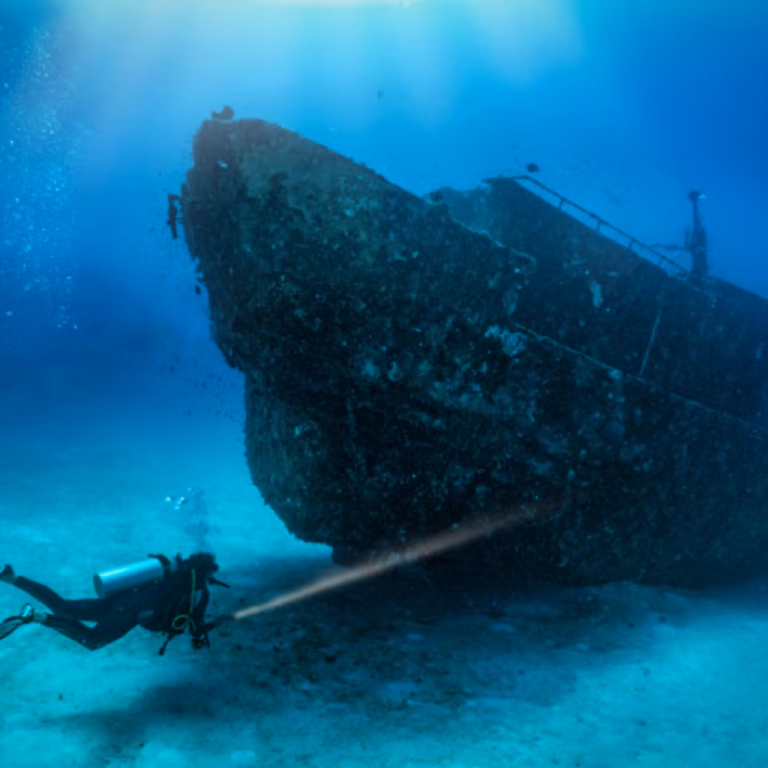
© Moofushi (Adobe Stock Images)
From bottom-trawling fishing boats to increased ocean acidity, shipwrecks and other maritime heritage are in peril throughout the world.
In 2011, the E/V Nautilus expedition discovered an ancient merchant ship at the bottom of the Black Sea, west of Ereğli, Turkey.
Sunk more than 2,000 years ago, it might have been in better condition if bottom-trawling fishing boats had not repeatedly scraped their nets along the seafloor, right through the site. In their wake, the ship’s ancient amphorae lay damaged and the hull timbers had been dragged from where they lay. Unfortunately, this is not an isolated incident.
In a recent study, Rory Quinn of Ulster University, Northern Ireland, and colleagues compiled data on known shipwrecks—some 150,000 records—and the movements of fishing vessels to reveal which underwater heritage sites are most at risk globally from deep-sea mining and trawling.
Writing in The International Journal of Nautical Archaeology, the team note that few shipwrecks lie in zones that could soon be exploited for deep-sea mineral mining—an industry in its early stages—but also that only 0.2% of wrecks worldwide lie in areas classified as fully protected, where mining would be prohibited.
Related articles
The Art Newspaper
- Why drones are a game-changer for archaeologists protecting heritage sites (September 2026)
- Archaeology can offer lessons for future space colonies—but we must protect existing lunar heritage first (August 2026)
- Recent discoveries reveal how natural disasters shaped past civilisations: can it help us plan for the future? (April 2026)
- Climate change is forcing tough choices - how much heritage can we save before it is too late? (March 2026)
- Layout of ancient stilt village in the Amazon may have been based on Pleiades star cluster (August 2023)
- Climate change is destroying archaeological sites before we can study them, scientists warn (November 2022)
- Ancient Roman road may lie beneath Venice's lagoon, researchers say (July 2021)
- A Bronze Age village is discovered beneath Lake Lucerne (April 2021)
- The Greeks in Egypt: on Sunken Cities at the British Museum (June 2016)