Mysterious megalithic sites in Carnac, France may be among the oldest in Europe, archaeologists discover
The Art Newspaper
July 11, 2025
© Bettina Schulz Paulsson
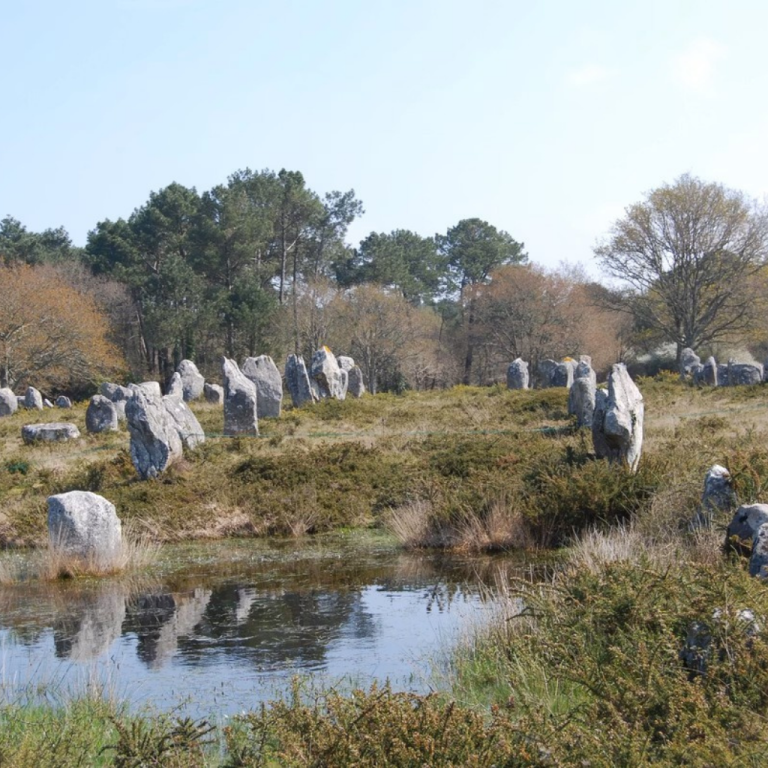
A section of the ancient complex, the age of which has long been debated, has been found to date back to between 4600 and 4300 BC.
Excavations at the megalithic complex in Carnac, France, have revealed that it may be the oldest site of its kind in Europe. Archaeologists working at Le Plasker—a newly discovered section of the heritage region—unearthed the foundation pits of standing stones which have been found to date back more than 6,300 years old.
This marks the first time that such accurate dates have been assigned to any part of the complex, where thousands of huge stones stand in parallel lines at different sites. Carnac was originally excavated in the 19th century, but these early investigators found it difficult to assign clear dates to the monuments and left little for future archaeologists to discover.
The rarity of organic material such as charcoal—used for radiocarbon dating—clearly associated with the stones, further hampered efforts to establish a chronology, leading experts to develop a wide range of theories about when the stones were erected.
Related articles
The Art Newspaper
- Malta's mysterious prehistoric temples may have taught sailors to navigate by the stars (June 2025)
- After a volcanic eruption, ancient Danes offered sun stones to the gods to bring back the light (January 2025)
- Rare ancient rock art found in Saudi Arabian lava tube (July 2024)
- Archaeologists in Peru identified one of the oldest megalithic structures in the Americas (March 2024)
- Yatch rock art: prehistoric carvings found in Norway may be oldest nautical images in the world (May 2021)
- Boat carvings found in Norway may be the oldest in Europe (April 2021)
- Mysterious stone structures in Saudi Arabia are around 7,000 years old (April 2021)
- Hear the sound of an ancient conch horn, played again after 18,000 years (February 2021)
- Discoveries at Stonehenge highlight controversial new tunnel's threat to heritage (February 2021)
- Voluptuous Venus figurines may have helped prehistoric Europeans survive the Ice Age (December 2020)
- Is the Nebra Sky Disk a millennium younger than we thought? (September 2020)
- Fingerprints help identify prehistoric painters (September 2020)
Science Magazine
Timeless Travels Magazine
- Ancient Orkney, Centre of the Neolithic World (Spring 2017)
- Malta: Island of Giants (Autumn 2015)