Migrants were a continuous feature of medieval Britain, archaeological study shows
The Art Newspaper
May 19, 2026
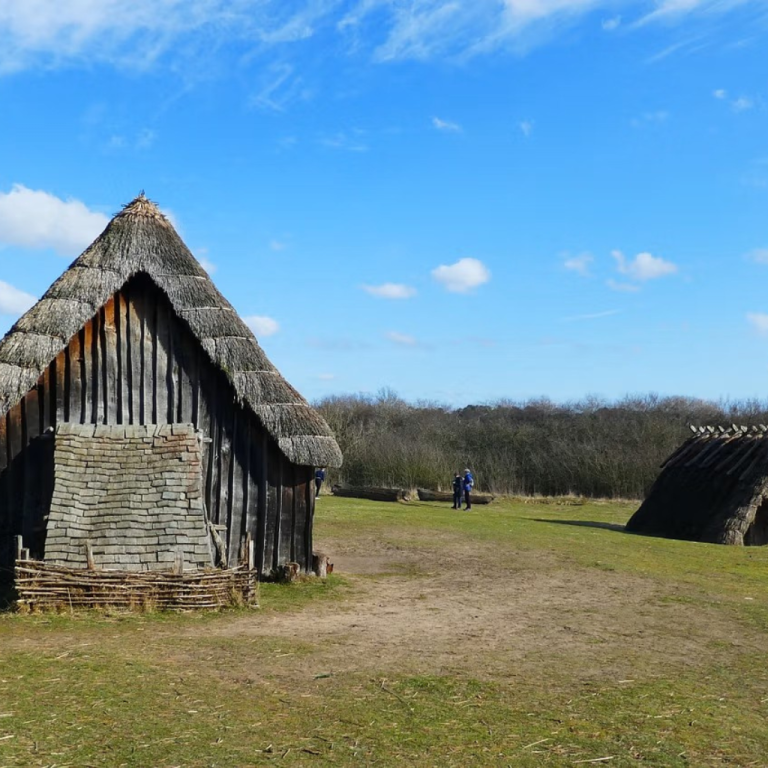
© Rob Farrow via Geograph
Scientific research shows that rather than a victim of invasion, early medieval Britain was a cultural melting pot.
In the sixth century, a monk named Gildas described the arrival of the Saxons in Britain as a mass movement of German and Scandinavian mercenaries, who descended on the island as a
punishment. His words, and writings by later authors, influenced our understanding of this era for over 1,000 years, giving rise to the theory of an Anglo-Saxon invasion.
But in recent decades, archaeologists have questioned this reconstruction of events: Perhaps the “invasion” was simply the arrival of a small armed elite. Over time, this dominant new group may have influenced Britons, leading them to adopt foreign fashions and objects.
If so, in a grave, a local would look no different from a foreigner, masking the true extent of migration. To shed light on this situation, a team led by Sam Leggett at the University of Edinburgh drew on data from hundreds of skeletons unearthed across England, all from the early medieval era—approximately AD 400 to 1100. By studying chemical signatures trapped in the skeletons’ tooth enamel, it was possible for the team to reconstruct whether these individuals had drunk water and eaten in locations that differed from where they were buried.
Related articles
The Art Newspaper
- First Americans may have sailed from north-east Asia, new research suggests (November 2025)
- Trove of coded letters written by an imprisoned Mary Queen of Scots are cracked (February 2023)
- Lost star catalogue found hidden on the pages of a medieval manuscript (October 2022)
- Obsidian spirit mirror used by John De, Queen Elizabeth I's court astrologer, has Aztec origins (October 2021)
- Discoveries at Stonehenge highlight controversial new tunnel's threat to heritage (February 2021)
- Is Nebra Sky Disc a millennium younger than we thought? (September 2020)
Science Magazine
Timeless Travels Magazine
- Ancient Orkney, Centre of the Neolithic World (Spring 2017)
SC Exhibition
- John Dee at Royal College of Physicians (May 2016)
- Museum of the Order of St John (April 2016)
History Today
- Migration in Roman Britain (April 2016)